How One Payment Integration Can Simplify Multiple African Markets
Payments
Why businesses expanding across Africa need unified payment access without treating the continent as a single payment market
Expanding into multiple African markets creates an unusual challenge for international businesses. From a commercial perspective, a company may see one regional growth opportunity. From a payments perspective, however, it can encounter a collection of very different financial environments.
Customers in one market may rely heavily on mobile money, while cards or bank-based payments play a larger role elsewhere. Businesses must deal with different currencies, local financial institutions, settlement arrangements and regulatory requirements. Even the technical processes required to accept a payment can vary from country to country.
As a result, geographic expansion can quickly become payment fragmentation. Every new market can mean another provider, another integration and another operational workflow.
A more scalable model is emerging: instead of building a separate payment stack for every country, businesses can connect to a Payment Service Provider (PSP) that provides access to multiple markets through a more unified integration.
The goal is not to make African payment markets identical. It is to make their differences easier for businesses to manage.
Africa Is a Region, Not a Single Payment Market
One of the biggest mistakes companies can make when expanding across Africa is approaching payments with a continent-wide assumption.
Africa contains more than 50 countries, multiple currency zones and highly diverse financial ecosystems. Banking penetration varies considerably. Mobile money has become deeply embedded in some economies, while cards, bank transfers, wallets and other payment methods have different levels of adoption elsewhere.
Regulation is similarly local. Payment providers operate within national or regional regulatory frameworks, and requirements surrounding licensing, customer verification, settlement and financial data can vary between jurisdictions.
This means there is no universal "African checkout" that works equally well everywhere.
A business expanding from one African country into five more may therefore discover that its existing payment setup does not scale automatically. The commercial expansion may be regional, but the payment requirements remain highly local.
The challenge is to preserve that local relevance without forcing the merchant to rebuild its payment architecture every time it enters another market.
The Traditional Expansion Model Creates Integration Debt
Consider a business entering its first African market. It connects to a local payment provider, integrates the required API, configures its checkout and establishes the necessary operational processes.
Then the business enters a second country.
A different provider may be needed. The technical team performs another integration. Finance receives another reporting format. Operations adds another dashboard and another settlement workflow.
By the fifth or sixth market, the company may no longer have a payment integration. It has a collection of integrations.
This creates what can be thought of as integration debt. Every additional connection needs to be built, tested, monitored, updated and maintained. When an API changes, developers need to respond. When something fails, operations teams need to determine which provider is responsible. Finance teams may receive transaction and settlement information in different formats.
The cost of fragmentation therefore continues long after the original integration is completed.
One Integration Changes the Scaling Model
A unified PSP model approaches the problem differently.
Instead of a merchant connecting independently to multiple payment environments, the PSP creates an intermediary layer between the business and those environments. The merchant integrates with the PSP, while the provider manages the connections required to support the payment methods and markets available through its platform.
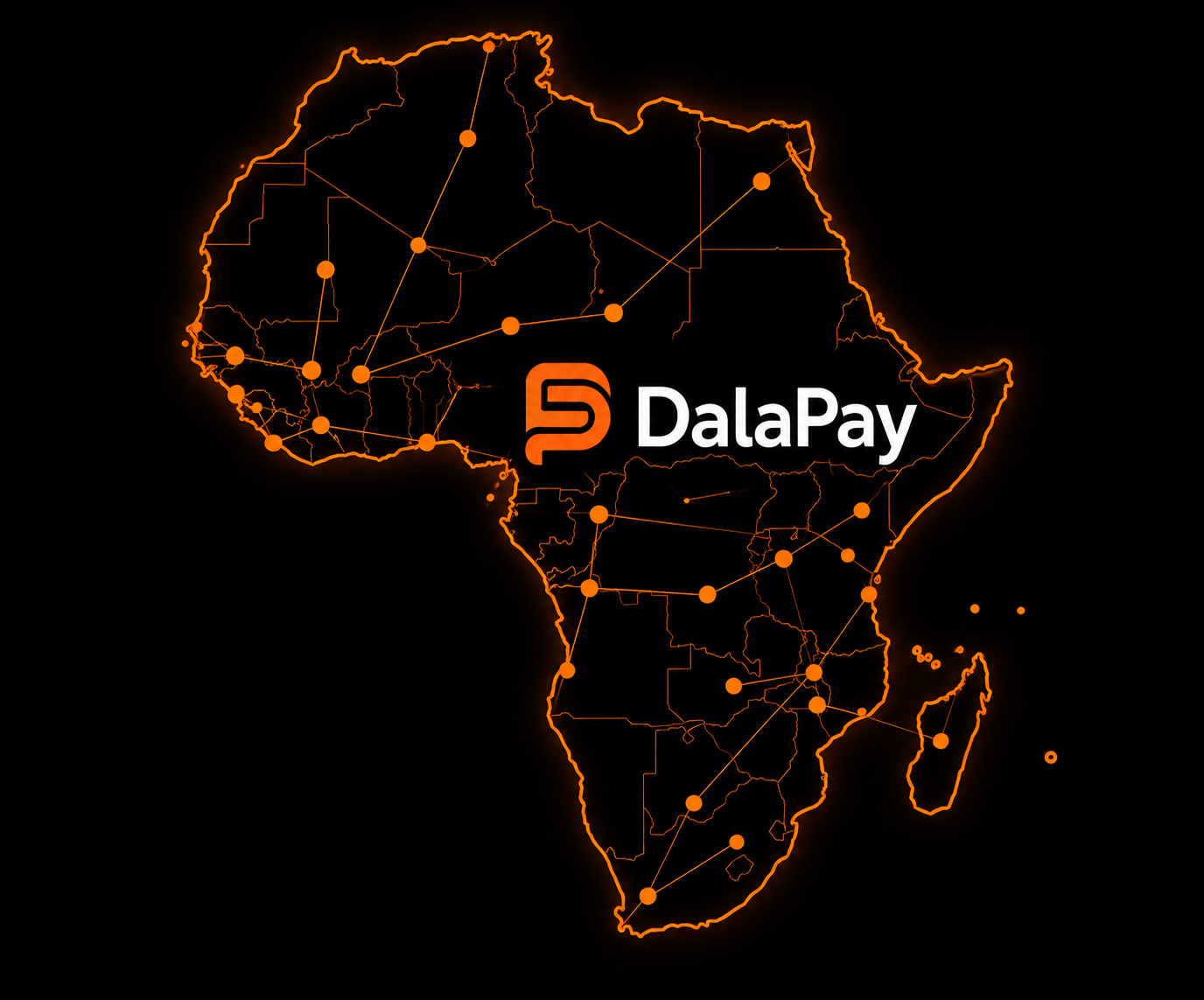
Conceptually, the architecture changes from multiple individual connections between the merchant and each market to a simpler structure: merchant → PSP → multiple payment environments.
The underlying complexity does not disappear. Different financial systems, currencies and payment methods still exist. The important difference is that the merchant does not need to manage every layer of that complexity directly.
This is what makes a unified payment integration valuable. It does not standardize Africa. It abstracts part of the fragmentation that makes African expansion operationally difficult.
Local Payment Methods Can Remain Local
A unified integration should not mean forcing every customer into the same payment method.
That would solve the merchant's integration problem by creating a customer-experience problem.
Successful international payment architecture needs to achieve both objectives: customers should have access to payment options appropriate to their market, while merchants should have a more consistent way to manage those options.
This distinction is fundamental. Payment localization and operational consolidation are not opposites.
A customer in one country might use mobile money. Another might pay by card. A third could use a bank-based method. Those transactions can originate through different financial systems while still becoming visible to the merchant through a more unified payment environment.
The front end remains local. The operational layer becomes more consistent.
Payment Localization Can Support Conversion
This architecture matters commercially because payment choice influences checkout behavior.
Customers are generally more comfortable using financial products and payment flows they already recognize. Asking someone to adopt an unfamiliar method simply because it is easier for an international merchant can introduce friction at precisely the moment when the customer is ready to buy.
For businesses entering new African markets, payment localization should therefore form part of market-entry strategy rather than being treated as a technical detail after launch.
The relevant questions include which methods customers actually use, which currencies they expect to transact in and how payment behavior differs between customer segments.
A unified PSP integration can make supporting those differences more practical. Instead of choosing between local relevance and technical simplicity, businesses can increasingly pursue both.
Multi-Currency Payments Add Another Layer of Complexity
Payment methods are only part of the challenge. International businesses also need to manage currencies.
A company operating across several African markets may accept transactions denominated in different currencies while maintaining its own financial reporting or treasury operations elsewhere. This creates additional requirements around transaction records, currency visibility and settlement.
Without a unified environment, currency complexity can become distributed across several providers. Finance teams may need to consolidate information manually before they can understand the company's overall payment position.
Multi-currency capabilities within a broader payment platform can reduce some of that operational fragmentation. The objective is not to eliminate currency differences but to make them easier to manage alongside multiple payment methods and markets.
Again, the underlying principle is abstraction: local financial environments remain different, while the business gains a more consistent layer through which to interact with them.
A Unified Integration Reduces Technical Overhead
The most obvious benefit of consolidation appears in engineering.
Every direct payment integration consumes development resources. Developers need to understand documentation, authentication requirements, error codes, transaction states, webhooks and testing procedures. Those connections then need ongoing maintenance.
When businesses expand internationally, engineering teams can find themselves repeatedly solving variations of the same problem.
A unified payment integration can reduce this duplication. The business develops against a more consistent interface while the PSP manages connectivity with the payment environments supported underneath it.
This can make geographic expansion less dependent on repeated payment engineering projects. Technical teams can spend more time improving the product and less time rebuilding basic payment connectivity for every market.
Operations Become Easier to Scale
The benefits extend beyond developers.
Payment operations become increasingly difficult when teams need to move between several providers to understand what is happening.
A transaction fails in one country. Operations checks one system. A refund is required in another market. The team opens another dashboard. Finance needs settlement information from a third provider and receives it in a different format.
Each individual process may be manageable. At scale, the fragmentation becomes expensive.
A more unified payment environment can provide businesses with greater consistency across transaction management and operational visibility. Teams can develop common processes instead of learning an entirely different workflow for every market.
That matters because operational complexity does not grow only with transaction volume. It also grows with the number of systems the company must manage.
Reconciliation Becomes a Scaling Issue
Reconciliation is another area where fragmented integrations create hidden costs.
Finance teams need to connect customer transactions with payment records, settlement information, refunds and internal accounting data. If each provider structures information differently, reconciliation becomes increasingly complicated as the business expands.
A company might successfully accept payments across several countries while creating significant manual work behind the scenes.
Unified payment data can help reduce this problem by giving finance teams a more consistent view of transactions across different markets and payment methods.
This is an important part of payment scalability that customers never see. A checkout may take seconds, but poorly designed payment operations can create hours of work after the transaction has been completed.
One Integration Does Not Mean One Provider Does Everything
There is an important distinction here.
A unified payment model does not necessarily mean that one company physically operates every underlying payment rail, bank connection or local financial network.
Modern payments are built through interconnected ecosystems.
PSPs can aggregate access to different financial environments and expose that connectivity to merchants through a more consistent interface. Banks, mobile money networks, payment systems and other regulated institutions continue performing their respective roles underneath.
The merchant does not need ownership of the entire chain.
It needs reliable access to it.
This is why the value of modern PSPs increasingly comes from their ability to abstract financial complexity rather than simply process an individual transaction.
Interoperability Makes the Model More Powerful
As African payment systems become more connected, the unified-integration model can become increasingly powerful.
Interoperability allows different financial systems to communicate or exchange value without requiring them to become identical. Local payment networks can continue serving domestic requirements while becoming more accessible through broader payment ecosystems.
This is more realistic than expecting every African market to adopt the same payment system.
The emerging architecture is therefore not based on standardizing consumer behavior. It is based on improving connectivity between different financial environments.
For merchants, this can eventually create a simpler experience above an increasingly sophisticated network underneath.
Regulation Still Remains Local
Technology cannot eliminate regulatory differences.
A business may have one technical integration and still operate across markets with different legal and regulatory requirements. Payment services, customer verification, financial data, FX and settlement can all be subject to jurisdiction-specific rules.
This is why "one integration" should not be confused with "one regulatory market."
The technical layer can become more unified while regulatory requirements remain distributed. PSPs operating across multiple markets therefore need to work within the relevant regulatory and institutional structures supporting each payment environment.
Over time, greater regulatory cooperation and interoperability could reduce some of this fragmentation. But businesses expanding today still need to recognize that technical simplicity sits on top of local regulatory complexity.
A Unified Layer Can Improve Market Entry
The strategic benefit becomes particularly clear when a business wants to enter another country.
Under a heavily fragmented model, management may need to ask: Which provider should we integrate? How long will development take? What new reporting workflow do we need? How will finance reconcile the transactions?
Payment integration itself becomes part of the market-entry timeline.
With a PSP already providing relevant connectivity, some of that technical work can potentially be reduced. Expansion becomes more about enabling and configuring the appropriate capabilities within an existing payment environment rather than beginning every market from zero.
This does not make expansion automatic. Commercial, regulatory and operational work remains.
But it can remove payment integration as one of the recurring barriers to geographic growth.
Payment Data Becomes More Valuable Across Markets
Consolidation also improves the strategic value of payment data.
When transaction information is fragmented across providers, comparing performance between markets can be difficult. A unified environment can give businesses a clearer picture of how their payment operations perform across geographies.
Companies can examine payment success rates, transaction volumes, currency patterns and payment-method performance with greater consistency.
That information can influence decisions far beyond payments. It can help businesses understand where demand is growing, where customers encounter payment friction and which markets may require further optimization.
Payments become a source of market intelligence.
AI Could Make Unified Payment Platforms Smarter
Artificial intelligence could increase the value of this aggregated data.
When payment information from multiple markets becomes available within a more consistent environment, AI systems can potentially identify patterns that would be difficult to see across disconnected platforms.
They could help detect unusual transaction behavior, analyze payment performance or identify changing patterns in particular markets.
Over time, payment platforms may become increasingly capable of recommending how businesses configure their payment experiences based on real transaction behavior.
The evolution is therefore not simply from many integrations to one integration. It is from fragmented connectivity toward connected payment intelligence.
One Integration Can Also Prepare Businesses for Agentic Commerce
AI agents introduce another reason to simplify the payment layer.
If software agents increasingly initiate approved commercial actions, they will need structured access to payment capabilities. Requiring an agent to understand dozens of unrelated payment integrations would recreate the same complexity businesses experience today.
A unified payment API provides an abstraction layer. The agent can interact with a consistent financial interface while the payment platform handles the underlying market-specific connectivity.
This reinforces a broader trend in financial technology: as the systems using payments become more sophisticated, the complexity of the payment infrastructure underneath needs to become increasingly invisible.
Where DalaPay Fits
DalaPay is a Payment Service Provider (PSP) helping businesses simplify domestic and international payments across African markets.
For merchants expanding across the continent, managing separate payment environments can create significant technical and operational complexity. Different markets may require different payment methods and currencies, but businesses should not necessarily need to rebuild their entire payment operation for every expansion.
Through a unified platform, DalaPay provides access to multiple payment methods and multi-currency payment capabilities. This helps businesses support locally relevant payment experiences while managing their payment operations through a more consolidated environment.
The value is not in making African markets identical. It is in making their diversity easier for businesses to navigate.
DalaPay is a portfolio company of Velex Investments.
The Future of African Payment Scale Is Abstraction
African payment ecosystems will continue evolving.
Local payment methods will develop. Instant-payment systems will expand. Mobile money will remain important in many markets. New financial products will emerge, and regulatory frameworks will continue changing.
Businesses should not need to rebuild their payment architecture every time that happens.
The more scalable approach is to separate the customer-facing payment experience from the complexity of the underlying financial environment.
Customers can continue paying through locally relevant methods and currencies. PSPs can provide the connectivity between those methods and merchants. Businesses can operate through a more consistent payment layer.
That is what abstraction makes possible.
Conclusion
Scaling across African markets does not require one African payment method, one currency or one financial system.
It requires a way to work efficiently across many of them.
A fragmented approach forces businesses to add integrations, providers and operational workflows every time they expand. Over time, the technical and financial complexity can become a barrier to growth.
A unified PSP integration changes that equation. Businesses can access multiple payment methods and currencies through a more consistent payment environment while preserving the local payment experiences customers expect.
The result is a more scalable model for African expansion: local relevance for the customer, unified connectivity for the business.
One integration does not eliminate the complexity of multiple African markets.
It makes that complexity manageable.
Written By

Jane Smith
Content Strategist
Share
More articles

Payments
How DalaPay Connects Mobile Money, Cards, and Banks
How DalaPay Connects Mobile Money, Cards, and Banks

Market Trends
How to Integrate Mobile Money Without Telecom Headaches
Why businesses expanding across Africa need access to mobile money without managing every telecom integration themselves

Market Trends
How Instant Payment Networks Are Changing Cross-Border Payments in Africa
From fragmented financial systems to faster, more connected regional commerce